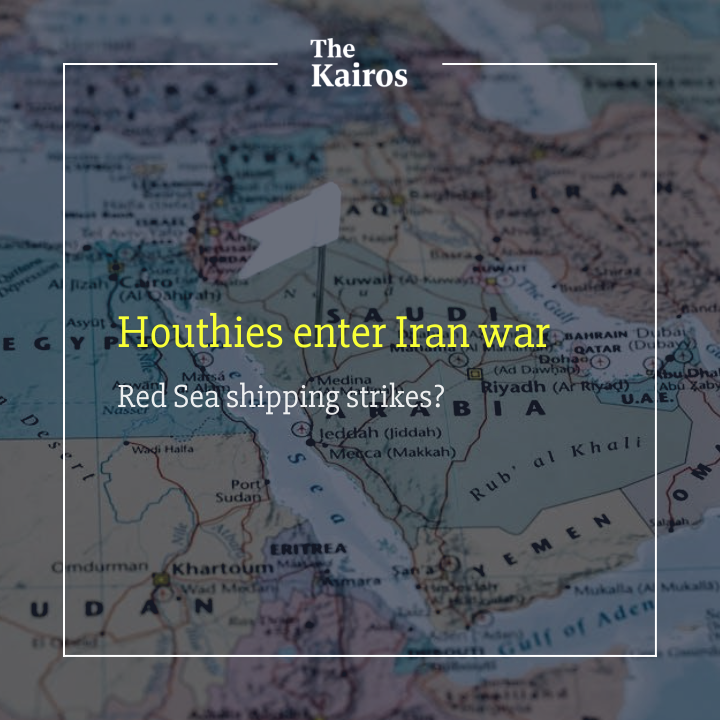
With the intervention of Houthi rebels in Yemen becoming a reality, are the Red Sea and Suez Canal completely blocked due to potential Oil supply chain disruptions? * Saudi Arabia is expected to take the hardest hit: Exporting crude oil via the Red Sea will face severe logistical hurdles.
- The impact on the Asia ↔ Europe route is somewhat nuanced: “Since November 2023, traffic rerouting around the Cape of Good Hope has already been surging.”
Following reports of the official intervention by the Houthi rebels in southern Yemen—widely classified as Iran’s “proxy” or “strategic ally”—speculation is mounting that the Red Sea and the Suez Canal will be entirely shut down. Based on our macroeconomic analysis, we view one part of this narrative as an undeniable reality, but the other as a limited misconception.
Are Asia-Europe Merchant Ships Already Rerouting Around the Cape of Good Hope?
These events could lead to significant Oil supply chain disruptions affecting global markets.
The short answer is yes. Ship traffic passing through the Suez Canal has plummeted since November 2023.
Following the outbreak of the Israel-Hamas war in October 2023, Houthi rebels began attacking Israel while simultaneously targeting and hijacking civilian merchant ships in the southern Red Sea. This immediate threat forced global shipping companies to aggressively reroute their vessels around the southern tip of Africa—the Cape of Good Hope.
The data confirms this massive logistical shift:
- UNCTAD (United Nations Conference on Trade and Development): Reports indicate that container ship traffic through the Suez Canal has plummeted by up to 90% during certain periods. Conversely, traffic bypassing the canal via the Cape of Good Hope has surged by up to 125%.
- World Bank: Echoing this trend, the World Bank announced that overall vessel traffic through the Suez Canal has dropped by 75% compared to historical averages, while Cape of Good Hope reroutes have increased by over 50%.
In short, the global supply chain has already adapted. A significant majority of commercial vessels have already priced in the geopolitical uncertainty originating from the Middle East and are currently navigating the much longer Cape of Good Hope route.
The Real Crisis: Saudi Arabia’s Crude Exports Face a “Double Blockade”
While global container ships can take the long way around Africa, the real geopolitical powder keg lies in Saudi Arabia’s crude oil exports. What happens when both the Red Sea and the Strait of Hormuz are compromised?
- 70% of Saudi crude exports pass through the ‘Strait of Hormuz’. What if the Red Sea is completely blocked as well?
If this “Double Chokepoint” scenario fully materializes, a drastic surge in international oil prices is inevitable.
Even if the Strait of Hormuz is blocked and Saudi Arabia attempts to use its East-West Pipeline as a last resort to pump oil to the Yanbu port terminal on the Red Sea, there is a severe infrastructure bottleneck. The pipeline can only handle a maximum capacity of about 7 million barrels per day. This physical limitation would cause catastrophic disruptions to Saudi crude exports and the broader global oil supply chain.
The Ultimate Takeaway: With Middle Eastern crude oil facing unprecedented supply chain disruptions, the global market will inevitably seek stability. Consequently, we anticipate a massive surge in demand for geopolitical “safe haven” assets—specifically, crude oil from North America and Europe.

Investment Precautions & Market Risks
- Extreme Volatility in Energy Markets: The situation in the Strait of Hormuz remains highly fluid. The official implementation of this toll, or any physical blockades, could trigger sudden and severe price swings in crude oil futures (WTI, Brent) and energy-related equities.
- Geopolitical Unpredictability: Investors focusing on the defense sector and macro-driven ETFs should closely monitor the diplomatic or military responses from the US, Israel, and allied nations. Unforeseen military escalations or the imposition of tighter sanctions can rapidly alter the global risk landscape.
- Macroeconomic and Inflationary Ripple Effects: A sustained 5–10% increase in everyday pump prices could reignite global inflationary pressures. This scenario may force major central banks (such as the Federal Reserve, the Bank of Canada, or the Bank of England) to delay anticipated interest rate cuts or maintain restrictive monetary policies for a longer duration.
- General Disclaimer: The insights and analysis provided on The Kairos are for informational and educational purposes only and should not be construed as professional financial or investment advice. Always conduct your own due diligence or consult with a licensed financial advisor before making investment decisions based on unfolding geopolitical events.

Leave a Reply